DevOps
TABLE OF CONTENTS
Preface
In today's fast-paced and ever-changing technology landscape, the need for efficient software development and operations is paramount. DevOps, a transformative approach that combines collaboration and automation, has emerged as a powerful solution. This blog serves as a comprehensive guide, providing a clear definition of DevOps, exploring its benefits, and offering a well-structured learning roadmap.
DevOps Definition
"DevOps is a software development approach that emphasizes collaboration and automation between development and operations teams to streamline the software development lifecycle and enhance delivery efficiency."
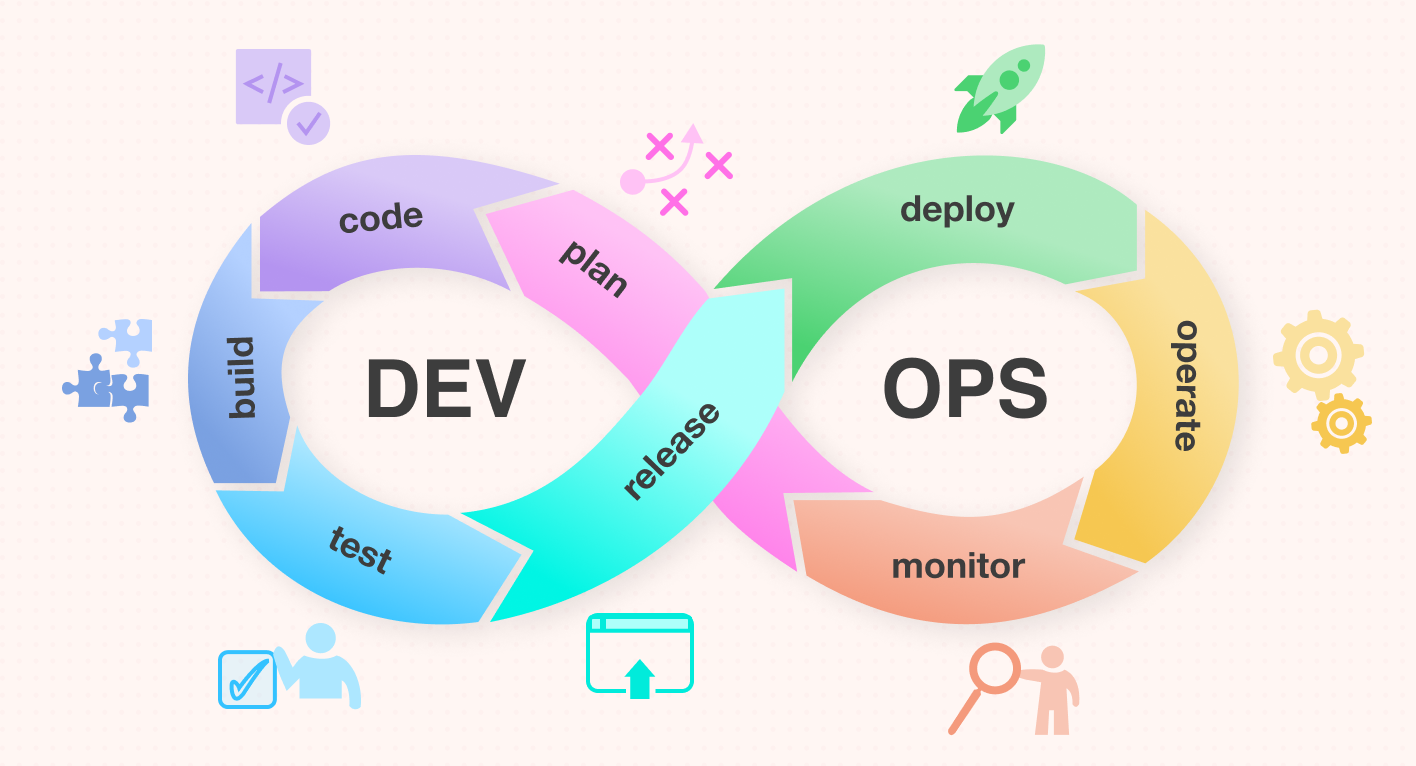
DevOps is a software development approach that combines software development (Dev) and information technology operations (Ops) to improve the collaboration and efficiency of the software development lifecycle. It aims to bridge the gap between development and operations teams by fostering a culture of communication, collaboration, and automation.
Traditionally, development and operations teams worked in separate silos, leading to communication gaps, slower release cycles, and increased risk of errors. DevOps, on the other hand, promotes cross-functional teams where developers, system administrators, quality assurance engineers, and other stakeholders work closely together throughout the entire software development process.
Key principles and practices of DevOps
Collaboration
DevOps encourages close collaboration and communication between development, operations, and other teams involved in the software lifecycle. This ensures that all stakeholders have a shared understanding of goals, requirements, and challenges.
Continuous Integration and Continuous Delivery (CI/CD)
CI/CD practices involve automating the building, testing, and deployment of software changes. It enables frequent and reliable releases, reduces the time between development and deployment, and improves overall software quality.
Infrastructure as Code (IaC)
DevOps promotes treating infrastructure configuration as code, using tools and techniques to define and manage infrastructure resources programmatically. This approach brings automation, scalability, and consistency to the deployment and management of infrastructure.
Automation
Automating manual and repetitive tasks is a core aspect of DevOps. By leveraging tools for provisioning, configuration management, testing, and monitoring, teams can streamline processes, reduce errors, and improve efficiency.
Monitoring and Feedback
DevOps emphasizes continuous monitoring of applications and infrastructure to gather data and feedback on performance, availability, and user experience. This data helps teams make informed decisions, detect issues early, and continuously improve their systems.
By adopting DevOps practices, organizations can achieve faster time to market, improved collaboration, increased deployment frequency, higher reliability, and better overall software quality. It fosters a culture of continuous improvement and innovation, enabling teams to respond quickly to customer needs and market demands.
Roadmap to help you navigate the learning path for DevOps
Understand DevOps Principles and Culture
Learn about the core principles and values of DevOps. Familiarize yourself with the cultural aspects and collaboration between teams.
Version Control and Source Code Management
Learn Git, a popular distributed version control system. Understand branching, merging, and resolving conflicts in Git.
Continuous Integration (CI)
Learn about CI concepts and benefits. Set up a CI server like Jenkins, Travis CI, or GitLab CI/CD. Configure automated builds, tests, and code quality checks.
Infrastructure as Code (IaC)
Understand the concepts of IaC. Learn tools like Terraform or CloudFormation for infrastructure provisioning. Practice defining infrastructure resources using code.
Configuration Management
Learn configuration management tools like Ansible, Puppet, or Chef. Automate server configuration and maintenance. Practice managing infrastructure as code.
Containerization and Orchestration
Learn Docker for containerization. Explore container orchestration platforms like Kubernetes or Docker Swarm. Understand concepts like containers, images, pods, and deployments.
Continuous Delivery and Deployment (CD)
Learn about CD and its benefits. Automate the deployment process with CD pipelines. Practice deploying applications to various environments.
Monitoring and Observability
Understand the importance of monitoring and observability in DevOps. Learn about tools like Prometheus, Grafana, or ELK stack for monitoring. Set up monitoring and alerting for applications and infrastructure.
Security and Compliance
Gain knowledge of DevSecOps principles. Understand security best practices for infrastructure and applications. Learn about compliance requirements and implement necessary controls.
Cloud Platforms and Services
Explore cloud platforms like AWS, Azure, or Google Cloud. Learn about cloud-native services and tools relevant to DevOps. Gain knowledge of managing infrastructure and applications in the cloud.
Continuous Learning and Improvement
Stay updated with the latest trends and technologies in DevOps. Engage in continuous learning through books, blogs, podcasts, and online communities. Seek certifications to validate your skills and knowledge.
Remember that this roadmap is a general guide, and you can tailor it based on your specific interests and goals. Learning DevOps is an ongoing journey, so embrace continuous learning, practical experience, and adaptability to keep up with the evolving DevOps landscape.